The Future of Sustainable Housing: How 3D Concrete Printing Reduces Waste
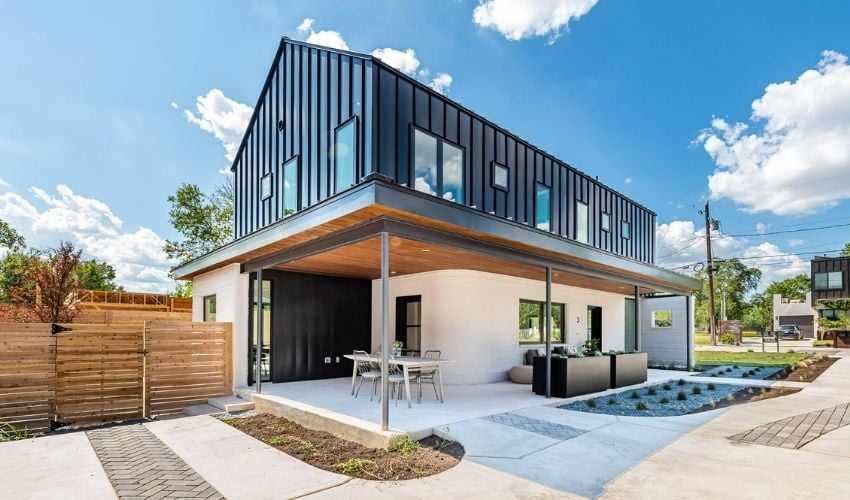
The Future of Sustainable Housing: How 3D Concrete Printing Reduces Waste
The construction industry has long been one of the largest contributors to global waste and carbon emissions. Traditional building methods involve significant material off-cuts, extensive transportation logistics, and energy-intensive manufacturing processes. However, a new paradigm is emerging: 3D Concrete Printing (3DCP).
At 3D Open Build, we are utilizing advanced additive manufacturing to rethink how we approach sustainable architecture. Here’s how 3DCP is drastically reducing waste and paving the way for eco-friendly housing.
1. Zero-Waste Manufacturing
Traditional construction often relies on subtractive methods or mold-casting, which inherently produces unused scrap materials. 3D Concrete Printing, as an additive manufacturing process, only uses the exact amount of material required for the structure.
By meticulously following digital models, our robotic printers extrude concrete layer by layer, eliminating the need for wooden formwork (which is typically discarded after use) and reducing concrete waste to near zero.
2. Optimized Structural Intelligence
One of the greatest advantages of 3DCP is the ability to print complex, organic geometries that would be impossible or prohibitively expensive to achieve with conventional methods.
This allows us to leverage topology optimization—the practice of putting material only where it is structurally needed. Walls can be printed hollow with internal lattice structures that provide immense strength while drastically reducing the overall volume of concrete used. Less concrete means a lower initial carbon footprint.
3. Enhanced Thermal Performance
The hollow cavities created during the 3D printing process aren't just for saving material; they serve a crucial environmental purpose. These cavities can be filled with eco-friendly insulation materials, creating a continuous thermal break.
The result is a structure with superior thermal mass and insulation properties, reducing the energy required for heating and cooling the home throughout its lifecycle.
4. Localized Production
Traditional construction often requires shipping prefabricated materials over long distances. 3D Open Build’s mobile printing technology can be deployed directly to the construction site. By sourcing our proprietary concrete mixture materials locally, we significantly cut down on the transportation emissions associated with heavy logistics.
Building a Greener Tomorrow
At 3D Open Build, we believe that innovation and environmental responsibility must go hand-in-hand. 3D concrete printing is not just a faster way to build; it is a critical tool in the global transition toward sustainable living.
Explore our portfolio to see our sustainable 3D printed projects and find more technical details at 3DOPENBUILD.COM.